

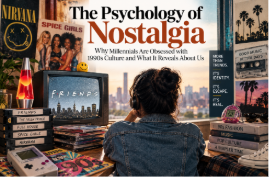

Research shows that 61% of millennials long for the 1990s, but it’s not simply a matter of fashion trends; it’s about identity, escape, and the quest for authenticity in a modern age.
In 2026 the 1990s are all around us: baggy jeans, Tamagotchis, Spice Girls remixes, Nirvana reunions and Full House reboots. Things which had been regarded as out of date are now honoured as iconic. Yet this is not about chasing trends for the sake of nostalgia.
A study carried out by GWI showed that 61% of millennials feel nostalgic for the 1990s, whereas 37% of Gen Z do so, most of whom were not yet born at the time. This significant difference reveals a meaningful fact about how nostalgia operates across generations.
Millennials didn’t merely watch the 1990s; they experienced them when they were at the most important stage in their lives. This point has psychological significance.
The preference for identity restoration instead of aesthetic aspiration.
The way in which millennial nostalgia operates is fundamentally different from the way Gen Z engages with the ’90s.
A study published in the Journal of Global Marketing states that nostalgia serves to restore one’s identity for those who have gone through a particular era, while it is aspirational and aesthetic for those who haven’t.
For millennials, a feeling of nostalgia for the ’90s connects them to earlier versions of themselves. It’s not just a matter of fashionable clothing or retro styles, it’s about reconnecting with who they were before adult responsibilities, economic anxiety, and digital overload took over their lives.
At the same time, members of Gen Z treat the ’90s as a thoughtfully selected style; since they didn’t live through that era, they take on that culture as a conscious rejection of the current state of hyper-digitalism.
Escape from the Digital Collapse
The 1990s are an example of a thing that is becoming all the more rare, authenticity before the arrival of the smartphone.
In the 1990s, there were no smartphones and no social media. People led more authentic lives. They obtained their music from cassette tapes and the radio, and instead of following current Instagram-based influencers, they adopted the subcultures of the day.
In 2026, with every moment being recorded, selected, and presented for social media audiences, the 1990s provide a way of escaping to a true human experience, there are no algorithms, no influencers, and no constant demand to be productive.
To many millennials the 1990s seem to have been a simpler and more carefree period. In view of the fast speed of modern life it comes as no surprise that we long for a time when the most important choice was simply which episode of ‘Boy Meets World’ to watch. Longing for the 1990s offers a reassuring retreat from today’s busyness, inviting a journey into a time when life seemed a bit less complicated.
It’s not simple fantasy; it’s a psychological necessity, since nostalgia acts as a cognitive escape from the continuous demands of today’s world.
The Authenticity Crisis
What the millennial generation really long for is not the 1990s, but rather authenticity, since the 1990s stand as a symbol of authenticity in collective cultural memory.
Because millennials link ’90s music and fashion to their childhood memories, these elements provide them with a sense of comfort and allow for self-expression. Whether it’s the excitement of coming across a vintage t-shirt from a band or the pleasure of rediscovering an old Arabic pop song, these associations help strengthen a sense of personal self-identity and belonging.
The 1990s were the final cultural phase before authenticity turned into a marketable commodity. It was before companies worked out how to present authenticity as a marketing strategy and before influencers turned honesty into paid content.
Dopamine Dressing and Joyful Rebellion
The way that millennials show their ’90s nostalgia tells us something about their present situation.
The same desire is having an impact on the way we dress. Social media accounts promoting ‘dopamine dressing’ deliberately go against the minimalism that Millennials embraced in the early 2010s. Those of our generation are posting outfits that feature bold colours, sequins and the combination of different patterns as a statement of their rebellion. For example, they combine satin skirts with large band tees and Vans.
Millennial pink and millennial beige, colors that once stood for sophistication, now seem rather empty. They failed to bring about any joy. The move towards bold colors, conflicting patterns, and unironic self-expression is a psychological act of rebellion against years of careful aesthetic selection.
Millennial pink and millennial beige are being given up on since, although they once signified aesthetic class and even wealth, they never brought joy.
What Nostalgia Reveals About Millennial Mental Health
The fact that there was such a strong millennial ’90s obsession was no coincidence; it shows that there were real psychological problems.
Because of rapid technological and cultural change, and because a generation suffering from burnout rather than thriving turns to nostalgia and finds comfort in looking back at the past, millennials are able to reconnect with who they are and who they used to be by watching shows from the ’90s. This serves as a means of finding comfort and stability in a world that never slows down.
Millennials are experiencing burnout, caused by economic instability, climate anxiety, constant digital connectivity, and the persistent culture of productivity. The 1990s act as a psychological escape valve, giving a cultural safe space where they can temporarily get away from the overwhelm they face today.
The Generational Difference in Nostalgia
The generation known as Gen Z isn’t any more attached to the 1990s than millennials are.
For Generation Z the thing that matters is the atmosphere as a whole. A lot of them believe that this generation stands for a carefree period centred on having a good time. Given the stressful situation we’ve gone through over the past few years, it’s not surprising that Generation Z should be nostalgic for easier times.
Gen Z treats ’90s nostalgia as an aspirational style, something that is cool, authentic, and different from their highly digital present , while Millennials experience it as a means of restoring their genuine identity by reconnecting with who they were before facing trauma and responsibility.
Looking Forward
The year 2026 is becoming the one in which nostalgia takes control of pop culture, since over the last year viral memes on social media have included the widespread expression ‘2026 is the new 2016’, which caused people to reflect on the things they had most loved ten years before, as well as celebrities posting photos from the 1990s.
The psychology behind millennial nostalgia is not about weakness but rather a survival strategy; in a world that is designed to draw attention and promote productivity, looking back on the past becomes an act of self-preservation.
The 1990s won’t be returning, but they are granting necessary psychological relief to a generation learning to cope with the present.