


When respect is thin on the ground visible signals become very tempting. A well known brand, a fairly expensive phone, a night out at the expensive end of the scale are all ways of telling the world that you’re in. That’s what Veblen called conspicuous consumption back in 1899. You’re not buying the item to use it, you’re buying it to show that you’re in.
For those with less money the pressure can be much greater as the fear of being looked down upon is very real. Social media magnifies that pressure by making your life a public one. The danger is that you can end up spending your way to success rather than actually achieving it.
Why Wealthy People Downplay Their Money
At the top end the logic is the reverse. If you’re already rich then shouting about it is of very little use and can in fact be counterproductive (it’ll generate envy, people will want to ask you for favours, people will criticise you). That’s where quiet luxury comes in: clothes that are simple, no logos, quality that’s only appreciated by the very few.
The quiet look is the signal. You know which unbranded jacket you’re meant to be wearing, you know which restaurant is the right one. That’s the sign that you’re part of a circle that doesn’t need to be showing off. Status doesn’t go away, it just changes its language.
Do the rich crave status more than the poor?
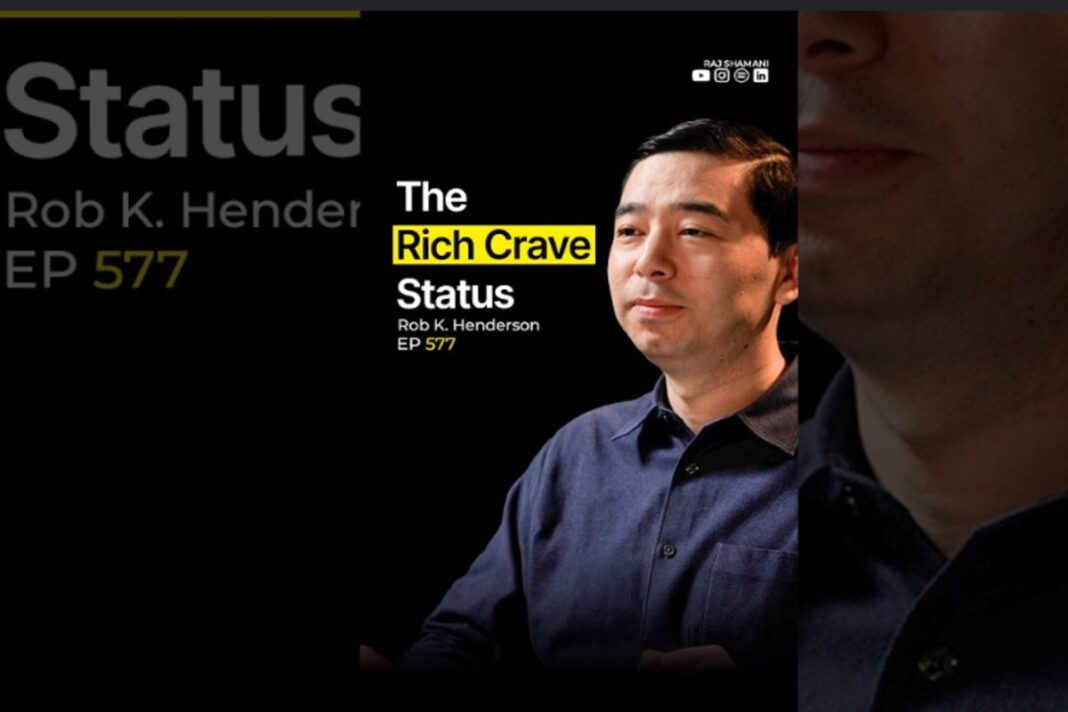
The episode also poses a rather counterintuitive question: who actually craves status more, the rich or the poor? Henderson’s take is that it’s the rich who crave it most of all. One way of making sense of that is that once your basic needs are met, status is one of the last things you’re going to be competing for.
It also goes some way to explaining why success never really feels like enough. We’re always going to be comparing ourselves with those just above us rather than those we’ve left behind so the finish line is always moving.
From Luxury Goods to Cultural Capital
Status symbols have changed. In the old days it was all about the big house, the expensive watch. Nowadays a growing proportion of status is derived from what the sociologist Pierre Bourdieu termed ‘cultural capital’ (the tastes, the knowledge, the manners, the connections that mark you as educated and well placed).
These you can’t just buy in the space of a day. The books you’ve read, the way you talk, the schools you’ve gone to and your very hobbies and holiday choices all send out signals. That’s why two people with exactly the same bank balance can be in two very different social worlds.
Luxury Beliefs: Status Through Opinions
One of Henderson’s better known ideas is that of ‘luxury beliefs’ i.e. beliefs which confer status on those who hold them whilst the cost of holding them is borne by the less well off. In this view the elite signal their status through beliefs which are cheap for them to hold and costly for the rest of us.
The concept is hotly debated. The critics will of course point to the fact that it can be applied selectively and used as a tool to simply shut down an argument without any real engagement with the substance of it. That said it does point to something genuine in that we live in a world where goods are so easy to copy that opinions have effectively become a status symbol.
What This Means for You
You do not need to play status games to benefit from understanding them. A few practical takeaways:
- Notice the signal. Before you go in for a purchase, ask yourself whether it’s for use or for impression.
- Build assets not appearances. Skills, savings and solid relationships outlast a logo.
- Audit your status. The episode is all about auditing your status in work, in family, in friends and in your online life.
- Remember status is relative. You’re very rarely going to get on well by comparing yourself with those above you.
Conclusion
Poor people pretending to be rich and rich people pretending to be poor (or at least not rich) are two sides of the same coin really. It’s the same human instinct at work: the desire to be taken seriously. The tools are different of course, from the overtly “logos” approach to the more subtle “quiet luxury” to the carefully curated opinions. But the objective is the same. Realising that instinct is the first step in actually playing it.
Source: Rob Henderson on Raj Shamani’s Figuring Out podcast, episode FO577.