

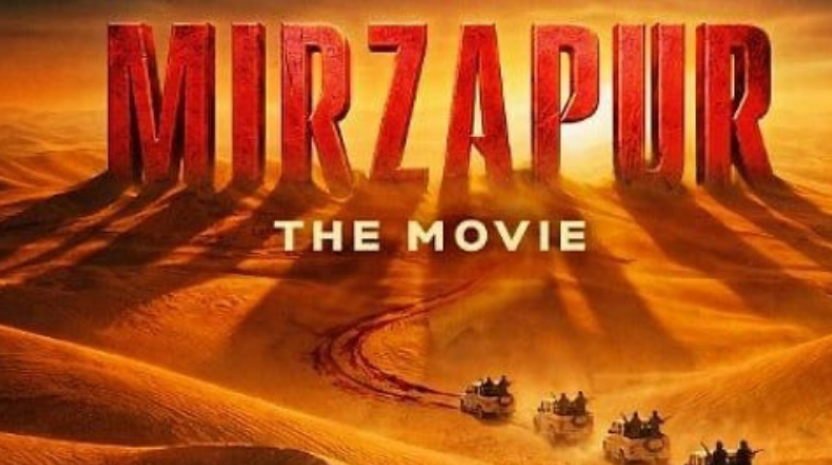

Historic September 4 release exceeds expectations as Excel Entertainment’s cinematic gamble pays off with massive opening weekend collections
Millions of people in the country watched the program Mirzapur over three seasons, and on September 4, 2026, the ruthless crime empire was shown in cinemas nationwide to great effect. The film adaptation of the very popular Prime Video crime series, Mirzapur: The Movie, set a historic record for Indian streaming content by transitioning to theatrical release and exceeded box-office expectations during its opening weekend.
The film’s first theatrical release was much more than just a regular franchise expansion. It showed how streaming television has fundamentally changed Indian entertainment by enabling the creation of stories with cinematic ambitions that audiences are willing to pay to see in cinemas.
From Living Rooms to Multiplexes
Moving from private home viewing to a theatrical presentation demanded courage and a firm belief in the audience’s loyalty. Excel Entertainment and Amazon MGM Studios approved this move into theatres, believing that the passionate fanbase developed over three seasons would result in a strong box-office return, a risk that proved to be a great success.
A key decision was made by the directors and producers: to show Mirzapur in cinemas and extend the universe beyond streaming. They pursued expansion and invested substantial resources to produce what became the most ambitious entry in the franchise.
The change turned out to be much more than just a matter of logistics; it involved a creative rethinking in which the storylines were compressed, expanded, and restructured to fit the 197-minute running time that theatrical audiences enjoyed, which was fundamentally unlike the episodic pace of television.
The revenue earned during its opening weekend was greater than the figures that industry experts had projected, with the film making ₹87 crore within India and ₹32 crore abroad, for a total of ₹119 crore in the first three days; this therefore established Mirzapur: The Movie as one of the major releases of September 2026.
Kaleen Bhaiya’s Empire Dominates Screen
It was Pankaj Tripathi who gave the role of Akhandanand “Kaleen Bhaiya” such credibility. The character, who had originally been a frightening antagonist, later became television’s most compelling antihero, commanding both loyalty and fear.
When Pankaj Tripathi reappeared in the role of the ruthless patriarch Kaleen Bhaiya, he brought an unmatched intensity to the theatrical format; his strong presence established the franchise’s emotional core and received critical acclaim for the depth of his refined performance.
Tripathi’s performance had greater impact on the big screen; his quiet expressions, his powerful silences, and his explosive outbursts all became more striking in the theatrical format, turning well-known character relationships into something fresh once again in a cinematic context.
Critics especially highlighted Tripathi’s scene in the climactic confrontation sequence, a moment that is now one of the most discussed aspects of the film on social media, showing that the theatrical presentation had elevated the character scenes beyond what is possible with streaming.
Guddu’s Challenge Delivered Impact
The character Guddu Pandit, played by Ali Fazal, showed the destructive nature of desire. What started as hesitant participation in criminal activity evolved into a deliberate move to gain power. The path he took from an ordinary person to a ruthless competitor established the series’ central conflict.
The film Guddu Pandit, written by Ali Fazal, shows his evolution from an outsider to a leading character, thanks to the theatrical format, which allowed for more extensive action sequences and dramatic confrontations previously restricted by streaming production limitations.
The medium of theatre allowed Ali Fazal’s character journey to reach cinematic peaks that could not be achieved in episodic television, and the clashes became much more visually impressive, while the character conflicts took on an operatic scale.
The audience’s reactions highlighted Ali Fazal’s performance intensity, as the film’s action scenes prompted spontaneous applause in several theatre chains , something seldom observed with streaming adaptations.
Munna’s Explosive Return Delivered
The fans’ anticipation of Divyenndu’s absence in the more recent seasons reached a climax, and when he returned as Munna Tripathi, described as chaotic, violent, and unpredictable, he disrupted existing power relations and introduced explosive turbulence into the established hierarchies.
The much-anticipated comeback of Divyenndu in the role of Munna Tripathi addressed the unsettled tensions in the franchise’s storyline, and the volatile nature of his character provided cinematic excitement that the audience enthusiastically welcomed.
The fact that Munna reappeared provided an answer to the question that had given the urgent drive to the theatrical narrative, namely, why had he disappeared? What changes had taken place during his absence? And how did his return disrupt the existing situation?
The way Divyenndu performed received special praise, with viewers on social media drawing attention to his intensity and stating that this role had reestablished him as one of India’s top television actors. Several scenes involving Munna went viral on Twitter during the opening weekend.
A Supporting Ensemble of Distinction
In addition to the central group, the returning actors add a certain level of complexity. Together with the new ones, Rasika Dugal, Shweta Tripathi Sharma, and Ravi Kishan form a cast whose conflicting interests lead to a rich narrative.
The way Jitendra Kumar plays Bablu Pandit gives a sense of youthful urgency to the existing power structures. Because of Shriya Pilgaonkar’s involvement, feminine perspectives can make an impact in a male-dominated criminal world. Ravi Kishan’s worn-out intensity indicates the effects of earlier seasons.
Cinematic Scope and Production Scale
The transition had to entail a greater production outlay, with filming taking place in the spiritual areas of Varanasi, the urban areas of Mumbai, and the vast desert regions of Rajasthan, each place fulfilling distinct narrative roles.
These places go beyond simply serving as a background. They act as visual representations of psychological conditions, the spiritual importance of Varanasi contrasted with criminal brutality; the density of Mumbai reflecting moral compression; the vastness of Rajasthan showing an ambitious scope.
The fact that the running time is 197 minutes is enough to accommodate this geographical and emotional broadening, since it enables the inclusion of prolonged shots and detailed scenes, something like streaming television’s episode format could not support.
Technical Enhancements for the Screen
Because a theatrical presentation requires technical excellence, the cinematography has to earn its place in a big-screen showing, the sound design must make use of theatre acoustics, and the color grading should account for the particular characteristics of projection.
The way films are shot is quite different from that used in streaming productions, employing theatrical color schemes and composing shots suited to cinematic projection rather than home screens.
These technical improvements turn ordinary material into something with a fresh visual appearance, thus making it worthwhile for a theatrical audience to invest their time and prompting critical reconsideration.
Box Office Success and Industry Impact
During its first weekend, it achieved a strong showing, the result of the franchise’s loyal fans as well as casual viewers who had come to know Mirzapur through promotional activity in cinemas.
In Mirzapur: The Movie, which was one of the highest-grossing films released in September 2026, industry observers observed that its success proves the viability of the streaming-to-theatrical approach for established OTT franchises. The critical response averaged 7.2 out of 10 on the major platforms, with audiences complimenting the technical improvements and the cinematic scale.
The success of the film sets an example for all future adaptations that go from streaming to theatrical release. It shows that it is possible to adapt popular digital content into theatrical formats, thereby affecting how OTT productions now approach eventual cinematic exploitation.
People who know the industry attribute the movie’s release to introducing Mirzapur to audiences who had never seen the streaming version, which could have turned cinema-goers into Prime Video subscribers, showing how success in theatrical exhibitions can support that of streaming exhibitions.
The Windowing Strategy in Action
After its run in cinemas, Mirzapur: The Movie will return to Prime Video at the end of an eight-week exclusivity period, keeping the film franchise’s digital home while also maximizing its theatrical revenue potential.
This windowing strategy combines the requirements of theatrical economics with the requirement to maintain streaming brand continuity. The success of the film during its opening weekend proves that the approach is sound, since theatrical exhibition and streaming support one another rather than competing, each increasing the value of the other.
Industry observers note that the theatrical release generated substantial buzz, which will likely drive Prime Video subscriptions once the film becomes available on the platform in mid-November. The eight-week window proved optimal for increasing both theatrical and streaming potential.