

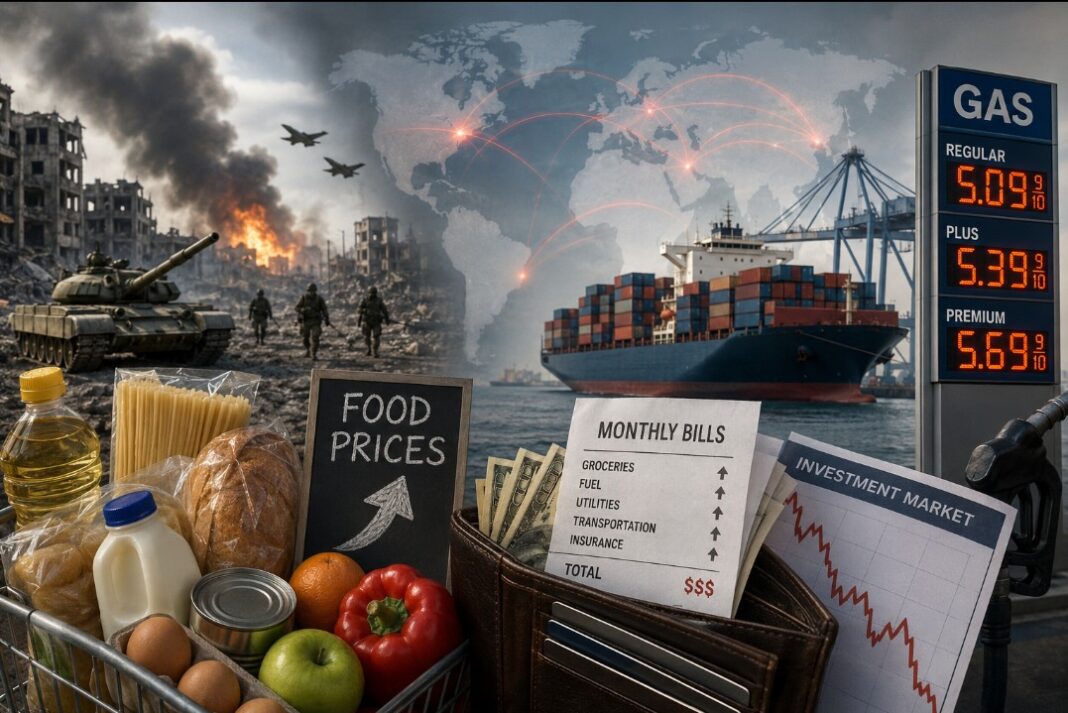

Wars are often viewed through the lens of geopolitics, military strategy, and humanitarian consequences. Yet for millions of people living far from conflict zones, war can still have a direct impact on daily finances. From rising grocery bills to higher energy costs, the economic effects of armed conflicts often reach consumers worldwide.
War often disrupts supply chains right away. Today’s economies depend on global networks to move food, fuel, raw materials, and goods. When conflict hits key shipping routes, ports, or factories, businesses pay more to transport and operate. These extra costs usually show up as higher prices for shoppers.
Energy prices often react quickly to global tensions. If fighting breaks out in a big oil or gas region, energy costs can jump. This affects not just drivers, but also businesses that rely on transport. As a result, prices for groceries and household items may go up. Families may see their monthly bills rise, even if the conflict is far away.
War can also drive up food prices. When fighting damages farms or disrupts exports, less wheat, corn, or cooking oil reaches the world market. This can make these foods more expensive everywhere. Shoppers may notice higher prices at their local stores.
Financial markets often respond to big conflicts. When things feel uncertain, investors look for safer places to put their money, which can cause ups and downs in stocks, currencies, and bonds. People with retirement accounts or investments may see their balances change. Even if these swings don’t always cause lasting losses, they can make people less confident and change how they spend.
War can also put extra pressure on government budgets. Spending more on defense, aid, and security can stretch public finances. Sometimes, governments borrow more money or change their tax and spending policies to cover these costs. These choices can affect taxes, public services, or even cause inflation.
Businesses feel the effects too. Companies that trade globally may face higher shipping costs, shortages, or new rules. Small businesses, which often have less room in their budgets, can be hit especially hard by rising expenses. This can mean higher prices for customers or less hiring and investment.
Experts say how much war affects finances depends on how big and how long the conflict is. Short conflicts may have only small effects, but long wars can cause bigger, lasting problems. Because the world is so connected, events in one place can affect markets and people everywhere.
For many families, it’s not always clear how war affects their money. But when fuel prices go up, groceries cost more, or markets get shaky, global conflicts might be part of the reason. In today’s connected world, the effects of war often reach right into our daily budgets.