

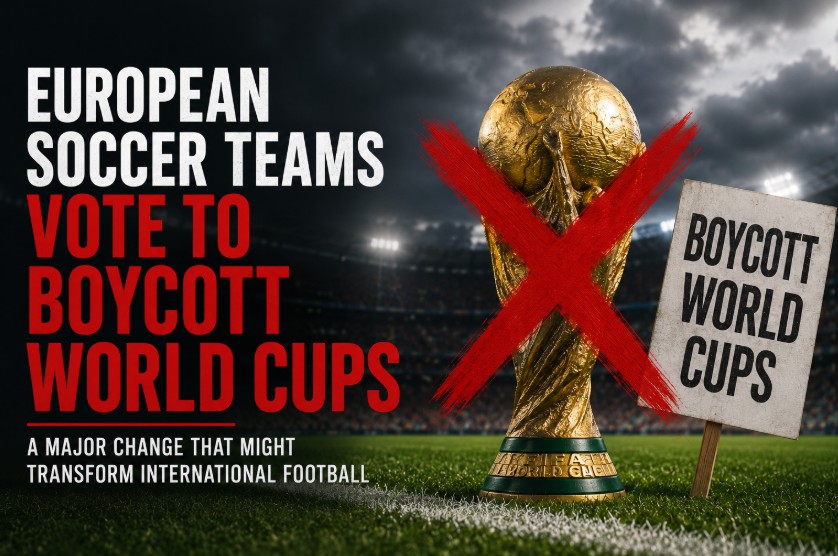

For the first time, top clubs are threatening to skip the World Cup because of a tough schedule and worries about player health.
This is a major development that could threaten the foundation of international soccer. European clubs have decided to boycott future World Cups because the schedule is too crowded, players don’t get enough time to recover, and FIFA isn’t looking out for their well-being.
This boycott is the biggest challenge to FIFA’s authority in decades. It shows that the most powerful clubs are finally taking a stand against a schedule that has pushed top players to their limits, both physically and mentally.e.
The Breaking Point
For years, European club leaders and managers have complained about how demanding the soccer schedule is. Domestic leagues, cup competitions, and the Champions League already mean top players play over 60 games a year. Adding World Cup qualifiers and the tournament itself further affects the season, creating a real crisis for professional athletes.
Now, top players often play more than 70 matches each season. Injuries are much more common. Only less important games allow for any real recovery time. Elite athletes compete at full intensity all year, with just a few weeks to rest between seasons.
European soccer teams are boycotting the World Cups because they are worried about player health and the demands of international competition.
This is no longer just talk. European clubs, who fund world soccer and develop most top talent, have made their stance clear: the current system can’t go on.
What Changed?
Several reasons led to this drastic step. FIFA expanded the World Cup, added more matchdays during the season, and created more international competitions, but didn’t cut back on domestic games. This has caused a scheduling mess that doesn’t make sense.
Consider the mathematics: A player in an elite European club participating in all possible competitions faces:
* 38 domestic league matches (minimum)
* 4-6 domestic cup matches
* 12-17 European Champions League matches (if club advances deep)
* 8-15 World Cup qualifier matches
* 5-7 World Cup tournament matches (if nation advances)
This means some players face over 80 professional matches a year during their best years, which is far too much for anyone.
The Player Welfare Crisis
The human cost of this schedule is now impossible to ignore. Sports medicine experts have noticed some worrying trends over the past five years. Sports medicine experts have noticed some worrying trends over the past five years
* Career-threatening injuries among elite athletes now occur earlier
* Recovery times have doubled for soft tissue injuries
* Mental health issues (anxiety, depression, burnout) among professional players have surged
Players now say that the schedule is their main source of stress. Recovery sessions are more about deciding which injuries to ignore than which to treat. Playing through pain has become the norm, even when it’s not sustainable.
When top athletes themselves ask for help, and captains of major clubs talk openly about being exhausted, it’s clear this is a real crisis, not only a minor scheduling issue.
FIFA’s Intransigence
The European boycott matters even more because this crisis has been raised with FIFA many times. Club managers, player unions, and sports scientists have warned about it for years, but FIFA hasn’t listened.
The international governing body, obsessed with expanding the World Cup to 48 teams and making more money from the tournament, seemed to brush off concerns from European club owners, seeing them as just complaints about lost income during international breaks.But here’s the issue: a World Cup without the best players from top clubs just isn’t the same. European teams dominate because their clubs develop the best talent. Without them, the tournament loses its prestige and value.
European clubs have called FIFA’s bluff.
The Domino Effect
The European boycott could change the whole soccer calendar. If top European players skip the World Cup, the tournament becomes much less attractive. Countries like Brazil, Argentina, and France might also feel pressure to pull out, and sponsorship deals worth billions could disappear.
More importantly, the boycott tells FIFA that the balance of power in world sports is changing. For years, FIFA had total control over international soccer, and European clubs relied on these competitions for their reputation and income, with few options to push back.
That dynamic has changed. The clubs are now deploying their most valuable asset, the world’s elite talent, to force systemic change.
What’s at Stake
This isn’t just about schedules or money. It’s about bigger issues:
Player Rights: Whether athletes have basic protections regarding workload and recovery, or whether sports organizations can demand unlimited availability without concern for long-term health.
Sporting Integrity: Whether world championships should feature elite athletes at peak physical condition, or whether participation in grueling schedules compromises athletic fairness.
Athlete Longevity: Whether professional careers should span 15-20 years, or whether burnout and injury force early retirement for talented athletes.
Financial Equity: Whether smaller nations can compete when top talent is spread thin across 80+ matches, or whether European clubs’ deeper rosters provide inherent advantages.
What Comes Next
The boycott vote doesn’t mean European players will definitely skip the 2026 World Cup. Instead, it’s a way to pressure FIFA to negotiate.
Likely outcomes:
Compromise Scenario:
* FIFA agrees to reduce international match dates
* Domestic clubs receive compensation for lost players
* The tournament reverts to traditional mid-season dates (not mid-season interruptions)
* Expansion is postponed or executed gradually
* Player rest periods are mandated between competitions
Worst-Case Scenario:
* Negotiations fail, and European players boycott the 2026 World Cup
* Tournament’s credibility collapses with reduced star power
* FIFA faces massive monetary losses and sponsorship withdrawal
* Global soccer enters unprecedented political crisis
Most Likely Scenario:
* Negotiations drag on into 2025
* Partial concessions are won by clubs
* Some reforms are implemented but fall short of demands
* European players participate in 2026, but with conditions attached
The Bigger Picture
This is a rare moment in modern sports: athletes and their clubs are joining forces to demand better working conditions from a powerful governing body.
It’s not revolutionary rhetoric, it’s basic labor advocacy. Professional athletes deserve reco This isn’t just dramatic talk; it’s about basic labor rights. Professional athletes deserve time to recover, protection from avoidable injuries, and a say in decisions that affect their bodies and careers. Finally saying “enough.”
It’s not clear if FIFA will listen or face the financial fallout from refusing to change. But one thing is certain: international soccer won’t be the same after this.
For Fans & Stakeholders
What this means:
* Players: Potential leverage to improve working conditions and recovery time
* Fans: Risk that future World Cups feature diminished star power if boycott occurs
* Smaller Nations: Uncertainty about competition structure and participation
* Broadcasters: Potential loss of marquee matchups if European stars are absent
* FIFA: Unmatched challenge to authority and revenue model
The Human Element
Behind all the politics and business issues is a simple fact: top athletes are burning out at an unsustainable rate. The European boycott is really about protecting a generation of talented players from risking their health and careers for FIFA’s business goals.
That’s a conversation worth having. This is a conversation that needs to happen. Europe’s clubs are making sure it does, whether FIFA likes it or not. The boycott vote represents the most serious challenge to FIFA’s authority in decades. By using their control over elite talent, European clubs are demanding systemic reform to international soccer’s scheduling. Whether this leads to significant change or unprecedented conflict in global sports remains to be determined, but the status quo is no longer sustainable.
The beautiful game’s future now depends on whether FIFA chooses reform or confrontation.