


Concerns about the future value of the Indian rupee have sparked intense discussions among economists, investors, and policymakers. One prediction that has gained attention is the possibility of the rupee falling to ₹150 against the US dollar. While such a scenario may seem alarming, it also presents an opportunity to examine the factors affecting the currency and discuss practical solutions that can strengthen India’s economic position in the long run.
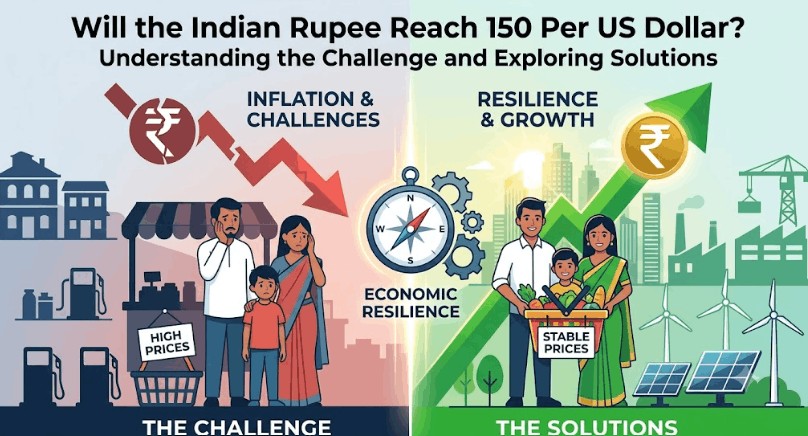
The value of a currency is influenced by a wide range of economic factors, including inflation, trade balances, foreign investment, government policies, and global market conditions. When a country’s imports exceed its exports, there is greater demand for foreign currencies such as the US dollar. Over time, this can place downward pressure on the domestic currency. India, being a major importer of crude oil, electronics, and other essential goods, often faces challenges related to trade deficits that affect the rupee’s strength.
Another factor contributing to currency depreciation is inflation. If domestic prices rise faster than those in other countries, the purchasing power of the currency declines. Investors may then seek opportunities elsewhere, reducing demand for the local currency. Additionally, periods of global uncertainty often lead investors toward traditionally strong currencies like the US dollar, further impacting emerging-market currencies such as the rupee.
One important solution is to boost exports. India has significant potential in sectors such as information technology, pharmaceuticals, manufacturing, renewable energy, and digital services. By increasing the global competitiveness of Indian products and services, the country can earn more foreign exchange and reduce pressure on the rupee. Encouraging innovation, improving infrastructure, and simplifying business regulations can help exporters expand their presence in international markets.
Reducing dependence on imports is another key strategy. Developing domestic manufacturing capabilities through initiatives that support local industries can help lower the need for imported goods. Investments in renewable energy and alternative fuel sources can also reduce reliance on imported oil, which remains one of India’s largest import expenses.
Attracting long-term foreign investment is equally important. Stable policies, transparent regulations, and a favorable business environment can encourage global companies to invest in India. Such investments bring capital into the country, support job creation, and contribute to economic growth, all of which strengthen confidence in the currency.
Fiscal discipline also plays a critical role. Maintaining sustainable government spending and managing public debt effectively can improve investor confidence and support economic stability. At the same time, controlling inflation through prudent monetary policies helps preserve the purchasing power of the rupee.
The possibility of the rupee reaching ₹150 per US dollar should not be viewed merely as a prediction to fear. Instead, it should serve as a reminder of the importance of building a resilient and competitive economy. By strengthening exports, reducing import dependence, encouraging investment, and maintaining sound economic policies, India can address the underlying challenges and create a stronger foundation for long-term currency stability and economic growth.