

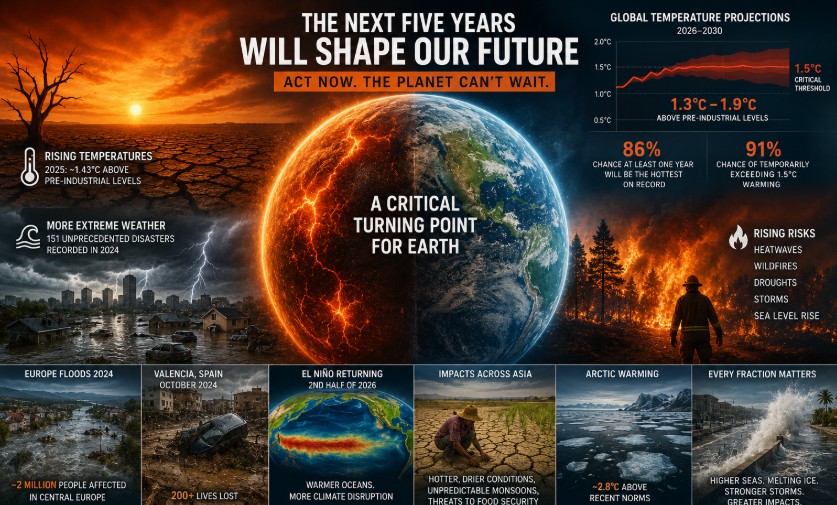

The planet is entering a period of climate instability unprecedented in modern history. Scientists warn that rising temperatures and increasingly severe weather events are pushing Earth into a critical state. Recent assessments from leading climate agencies indicate that global warming is accelerating, resulting in heightened risks for communities, economies, and ecosystems worldwide.
Recent climate projections indicate that 2025 was among the hottest years on record, with global temperatures reaching approximately 1.43°C above pre-industrial levels. Experts predict that average temperatures between 2026 and 2030 could range from 1.3°C to 1.9°C above historical norms, thereby increasing the likelihood of more intense heatwaves, floods, droughts, and storms.
Researchers report a high probability of breaking additional temperature records. Climate forecasts estimate an 86% likelihood that at least one year during the 2026–2030 period will become the hottest year ever recorded. There is also a 91% probability that global temperatures will temporarily exceed the internationally significant 1.5°C warming threshold, a level long associated with escalating climate impacts.
The upward temperature trend is already evident in the frequency and severity of extreme weather events. In 2024, there were 151 unprecedented climate-related disasters globally, including record-breaking floods, powerful storms, and severe heatwaves. Many of these events surpassed any previously documented occurrences in their respective regions.
Europe offers clear examples of the human cost associated with climate disruption. Flooding across Central Europe in September 2024 affected approximately two million people and caused extensive damage to infrastructure and communities. In October, catastrophic floods in Valencia, Spain, resulted in more than 200 fatalities, underscoring the increasing dangers posed by extreme rainfall events.
Climate experts are closely monitoring the anticipated return of El Niño in the second half of 2026. This natural climate pattern, characterized by unusually warm Pacific Ocean waters, significantly influences global weather systems. Forecasts suggest that the forthcoming El Niño could further amplify global temperatures and disrupt rainfall patterns across multiple continents.
Asia is projected to experience some of the most significant impacts. Meteorologists warn that certain areas may face hotter and drier conditions, while monsoon patterns in countries such as India could become less predictable. These disruptions may affect agriculture, water resources, and food security for millions of people.
Simultaneously, climate change is reshaping regional weather patterns. The Arctic is warming approximately three times faster than the global average, with temperatures reaching about 2.8°C above recent norms. The Amazon rainforest is experiencing increasing dryness, while northern Europe, Siberia, and parts of Africa’s Sahel region are projected to encounter wetter conditions.
Scientists emphasize that every fraction of a degree of warming is significant. Even minor temperature increases can intensify heatwaves, accelerate glacier melt, raise sea levels, and increase the frequency of extreme weather events.
As global temperatures continue to rise, experts contend that the coming years will be pivotal. Without substantial reductions in greenhouse gas emissions, current climate change could have consequences lasting for centuries, fundamentally altering weather patterns and living conditions for future generations worldwide.