

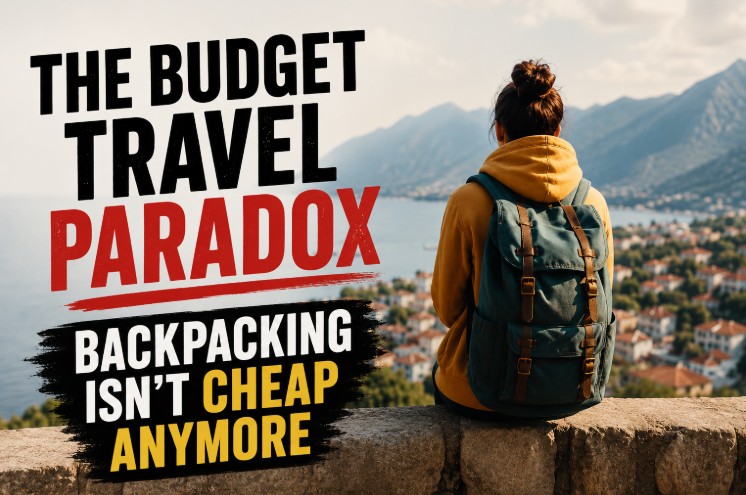

Remember when backpacking was all about tight budgets, cheap hostels, and the pleasure of traveling on just $10 a day? Those days are over. Now, backpacker culture has turned into a luxury hobby that, ironically, mostly the wealthy can afford.
This isn’t just about inflation. Something deeper has gone wrong in the world of budget travel. The real twist is that a movement meant to make adventure accessible to everyone has now turned into an exclusive club.
The Instagram Effect on Backpacker Economics
Instagram changed everything. Once backpacking became something to show off online, destinations changed fast. Bali, which used to cost $5 a day, now starts at $50 a night. Thailand’s beaches, once favorites for backpackers, now attract influencers looking for the perfect sunset photo.
Popular destinations didn’t just get more expensive; they also lost some of their charm. Landlords started charging Western prices to tourists looking for “authentic” experiences, while locals could no longer afford to live in their own neighborhoods. The backpacker trail turned into a marketing tool, and hostels changed from basic places to stay into trendy spots with craft cocktails, coworking spaces, and rooftop bars made for social media.
A bed in a Bangkok hostel that cost $8 in 2010 now costs $25 to $30. That’s not really budget travel anymore. It’s just regular travel with a shared bathroom and a trendy new look.
The Hidden Costs Nobody Talks About
The paradox gets even bigger here. Modern backpacking now needs technology, constant internet access, and social proof that older travelers never worried about. You need a smartphone (at least $800), international data plans, a laptop to look like a “digital nomad,” travel insurance, and enough social media activity to make your trip seem real.
Flights have changed too. Budget airlines once made international travel possible for more people, but now prices have gone up as competition has decreased. A round-trip ticket to Southeast Asia that cost $600 ten years ago now costs between $900 and $1,200.
The real surprise is that today’s backpackers feel pushed to spend even more. They need activities for social media, not only a place to sleep. Tours, adventure outings, and “unique” meals are now must-haves, not extras. Budget travel now means spending at least $40 to $50 a day just to keep up.
The Gatekeeping Problem
Backpacker culture was meant to be open to everyone. You could go anywhere, try anything, and figure things out along the way. Now, it’s mostly for those with privilege. You need savings, often help from parents, and the confidence that comes from family wealth. Taking a gap year to travel is becoming something only wealthy kids do, not a true adventure for everyone.
The irony is clear. Backpacking started as a way to reject consumerism and class differences. Now, it has become the perfect example of both. People aren’t merely traveling anymore; they are showing off travel as a way to signal privilege, freedom, and cultural status.
Meanwhile, real budget travelers, those who travel because they have limited money, not for the look, have been pushed out. They can’t afford the Instagram-ready hostels or the experiences that now define backpacker culture.
What Killed Budget Travel
It’s simple. Market forces met the rise of aspirational content. Entrepreneurs saw a chance to make money and focused on profit. Destinations realized they could charge Western prices. Younger travelers, keen to join in, paid whatever was needed.
The backpacker trail used to be about escaping consumer culture, but now it’s the opposite. People buy experiences, consume destinations, and document everything for approval from others.
The real budget travel revolution is happening in places that Instagram hasn’t found yet. Honestly, that’s probably for the best